From the bass-heavy world of Dubstep Mechanical Omkar to a new generation of Marathi lofi, remixes and experimental production, Omkar Dahibavkar's journey has always been driven by one idea: create music that sounds different.
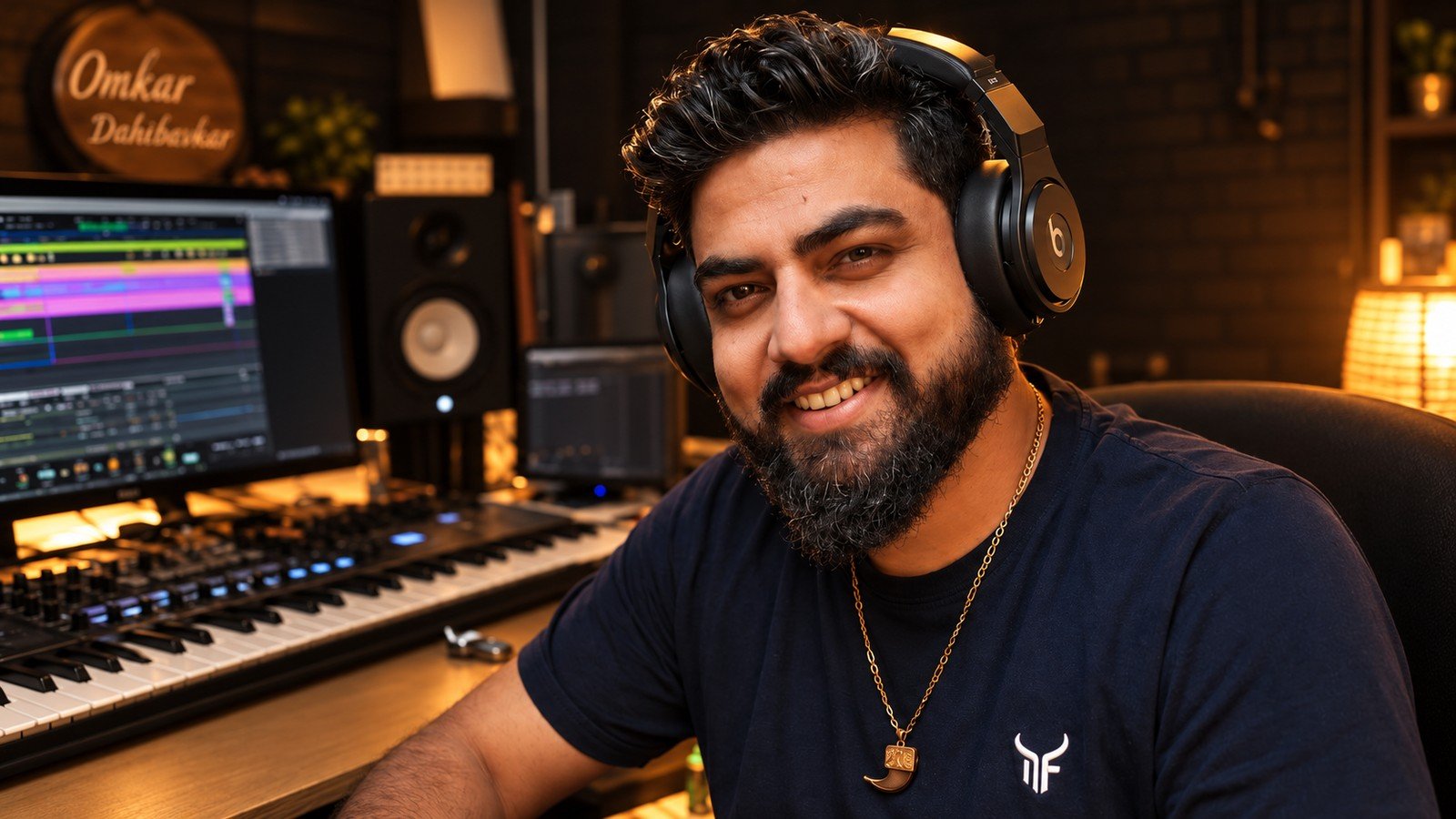
Omkar Dahibavkar is an independent music artist, producer and composer from Mumbai, India. His journey into bass music began at the age of 16, when a fascination with electronic production quickly turned into a serious passion for creating his own sound.
In the early electronic music community, Omkar became known as Dubstep Mechanical Omkar. Rather than following a conventional Dubstep formula, he began combining emotional piano melodies with aggressive electronic sound design.
His productions brought together two very different musical worlds: the warmth and emotion of the acoustic piano with heavy basslines, monstrous growls, sharp screeches and powerful Dubstep drops. That contrast became one of the defining characteristics of his early sound.
As he continued producing and sharing music online, his work gained attention in the electronic music community and received support from established artists including Bassjackers, KSHMR, twoloud and DJ BL3ND. The response also led to collaboration opportunities, promotional requests and growing recognition among online bass-music listeners.
Around 2013, Omkar became associated with UnrealSound, where his releases became part of the label's catalogue and helped introduce his music to a wider electronic audience.
The piano has always played an important role in Omkar's musical journey. Years of playing, composing and recreating music on the instrument gave him a strong connection to melody, harmony and emotion.
Instead of treating Dubstep purely as aggressive bass music, he used piano melodies to create atmosphere and emotion before taking listeners into heavier sections of a track.
His introduction to the wider world of Dubstep came after a friend introduced him to Monstercat. Discovering that world of electronic music encouraged him to experiment further with bass-heavy production.
Artists such as Skor and Panic were also among the early influences that showed him how melodic ideas and harder electronic production could exist together. Instead of simply recreating that sound, Omkar began developing his own interpretation.
Atmospheric melodies and musical phrasing shaped by years of playing piano.
Growls, screeches, dramatic drops and aggressive electronic textures.
Soft melodic emotion and hard electronic impact existing in the same track.
As the years passed, Omkar's musical interests continued to expand. Although Dubstep played a major role in shaping him as a producer, he never wanted his creativity to remain restricted to one genre.
The identity Dubstep Mechanical Omkar represents an important chapter of that journey — the period in which he learned sound design, electronic production and how to build an independent musical identity.
Today, his primary artistic identity is simply Omkar Dahibavkar. The name evolved, the genres expanded, but the experimental mindset remained.
In 2026, Omkar decided to take his musical journey in a completely new direction: to bring his production experience into Marathi music and add something fresh to the scene.
That idea led him toward Marathi Lofi. Familiar Marathi melodies were reimagined through atmospheric production, softer textures, emotional soundscapes and contemporary lofi arrangements.
The response from listeners on YouTube became an important turning point. Audiences connected with the music and showed strong love and support, encouraging Omkar to continue exploring this new direction.
But Marathi Lofi was only the beginning. Omkar also began creating unconventional and experimental Marathi remixes, using ideas shaped by years of Dubstep, electronic sound design, piano composition and modern production culture.
The goal was not simply to make another remix. It was to explore what familiar Marathi music could become when approached from a completely different production perspective — blending nostalgia with contemporary sound, emotional melody with new-age rhythm, and familiar songs with unexpected sonic ideas.
Omkar's catalogue now explores different sides of music including electronic music, Marathi Lofi, DJ-style productions, devotional interpretations, television title-song reinterpretations and experimental remixes.
Each chapter adds something new to the same musical identity. The aggressive energy of his early Dubstep years still influences his production instincts, while piano, melody and emotional arrangement continue to shape the softer side of his work.
Rather than focusing only on what is currently popular, Omkar continues to experiment with contrasting genres, emotions and production styles in search of combinations that feel uniquely his own.
For Omkar, music has never been only about releases, streams or numbers. The listeners who discovered his work, shared his tracks, encouraged his experiments and continued supporting his music have always been an important part of the journey.
From the early Dubstep community to the listeners now discovering his Marathi music, that support continues to motivate him to create, experiment and evolve.
Omkar remains grateful to everyone who has listened to his music and supported the different stages of his career.

Berklee College of Music / Berklee Online • Electronic Production and Design
View Credentials